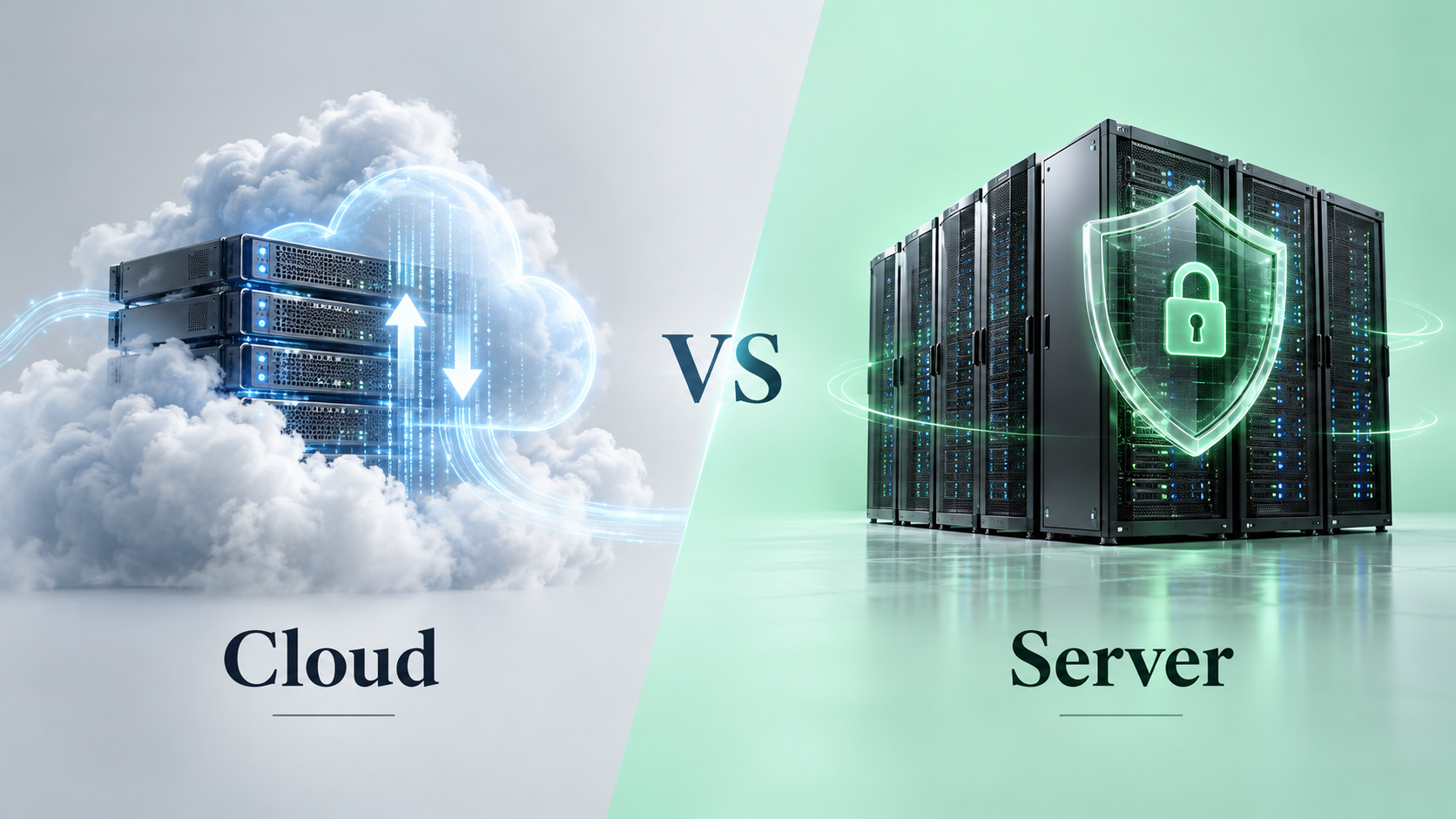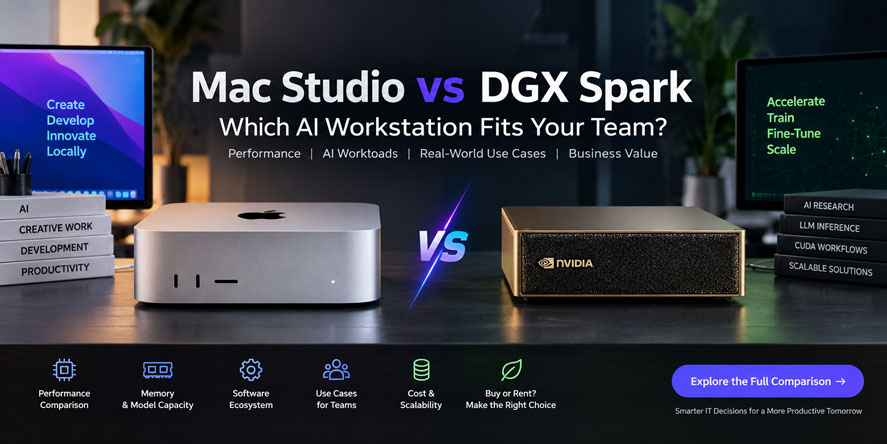

AI startups face an infrastructure challenge that becomes more significant as their models, datasets, and teams grow. Powerful computing is essential, but building that infrastructure can demand substantial capital. For startups with evolving or project-based compute requirements, choosing a GPU on Rent can provide access to high-performance hardware without committing to an upfront purchase.
A development team may initially need a GPU workstation for experimentation, then require considerably more compute for fine-tuning, model training, inference, or a client project. At the same time, the hardware landscape continues to evolve. Current professional GPU options range from workstation-class hardware such as NVIDIA’s RTX 6000 Ada with 48GB of GPU memory to newer RTX PRO 6000 Blackwell systems with 96GB.
Therefore, choosing between renting and purchasing hardware is not simply a question of finding the cheaper option. Startups need to consider utilization, project duration, scalability, cash flow, maintenance, upgrade cycles, and the value of ownership.
The right choice depends on how the infrastructure will actually be used.
Why GPU Infrastructure Decisions Matter More in 2026
AI infrastructure is no longer limited to one standard configuration.
Different workloads can have substantially different requirements. Prototyping, local inference, fine-tuning, computer vision, generative AI, data science, and large-scale training may each require different amounts of GPU memory and processing capacity.
For example, NVIDIA currently positions its RTX PRO 6000 Blackwell Workstation Edition with 96GB GDDR7 memory for workloads including local AI development, model fine-tuning, data science, and agentic AI. Meanwhile, data-centre platforms extend much further: NVIDIA’s H200 provides 141GB HBM3e per GPU, while B200 provides 180GB HBM3e per GPU.
Consequently, buying a particular configuration today can lock a startup into hardware selected around today’s workload.
That is not necessarily a problem. However, it makes expected utilization and useful life important parts of the investment decision.
GPU on Rent Converts Infrastructure into a Flexible Expense
Purchasing hardware creates an upfront capital requirement. Once acquired, the startup owns the asset regardless of whether utilization remains high.
A GPU on Rent, by contrast, shifts the decision toward paying for infrastructure over the required rental period rather than purchasing the complete asset upfront.
This can be particularly useful when:
- A project has a defined duration.
- A new AI product is still being validated.
- GPU requirements may change after testing.
- Additional developers need temporary systems.
- Compute demand increases during specific development stages.
- A client project requires a particular hardware configuration.
- The business wants to preserve capital for hiring, product development, or other priorities.
However, renting is not automatically more economical. If a company requires the same hardware continuously for several years and expects high utilization, ownership may produce stronger long-term economics.
Therefore, the comparison needs to go beyond monthly rental price versus purchase price.
Buying GPUs Gives Startups Greater Ownership and Control
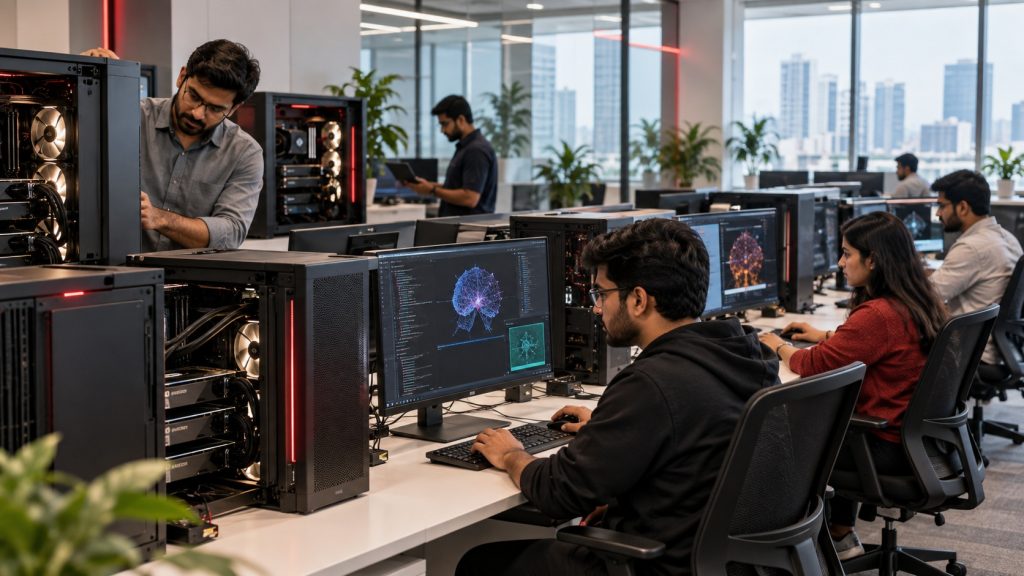
Purchasing can make sense when workloads are predictable and long-term.
The most obvious advantage is ownership. Once the equipment has been purchased, the startup controls how long it remains in service and how it is configured, subject to warranties, licensing, compatibility, and internal IT policies.
Ownership can be attractive when:
- GPU utilization is consistently high.
- The same configuration will remain suitable for years.
- The company has sufficient capital available.
- Internal teams can maintain the infrastructure.
- Hardware availability must be guaranteed internally.
- Data or operational policies favour company-controlled infrastructure.
Furthermore, purchasing removes recurring rental payments after the asset has been fully paid for.
However, the purchase price is only part of total cost of ownership.
The Real Cost of GPU Ownership Extends Beyond Purchase Price
When evaluating purchased infrastructure, founders and CFOs should calculate the complete cost over its expected useful period.
That can include:
- GPU or workstation purchase cost
- Supporting CPU, RAM and storage
- Power requirements
- Cooling
- Maintenance
- Repairs and component replacement
- IT administration
- Warranty considerations
- Downtime
- Upgrade costs
- Depreciation
- Residual or resale value
Power requirements alone can become meaningful as systems become more capable. For example, NVIDIA lists a maximum power consumption of 300W for the RTX 6000 Ada, while the RTX PRO 6000 Blackwell Workstation Edition reaches 600W. Actual system-level consumption will also include the CPU and other components.
Therefore, comparing only the purchase invoice with a rental quotation can produce an incomplete picture.
GPU Rental Reduces the Risk of Idle Infrastructure
Utilization is one of the most important metrics in this decision.
Imagine an AI startup purchasing several high-performance workstations for a six-month model-development project. During those six months, utilization may be extremely high.
After deployment, however, the team might shift toward less compute-intensive development or move to a different architecture.
The machines still have value, but their utilization could decline significantly.
With GPU rental, the company can align the rental duration more closely with the active requirement. Once the project ends, rented systems can be returned rather than becoming underused assets.
This is particularly relevant for startups because their infrastructure requirements can change quickly as products move from experimentation to training, optimization, inference, and production.
GPU on Rent Can Simplify Hardware Scaling
AI workloads rarely grow in a perfectly predictable way.
A startup may begin with one AI engineer and later add a full ML team. Similarly, a model that works comfortably on an initial workstation may eventually require more GPU memory or multiple GPUs.
Current professional GPUs illustrate how broad that hardware range has become. NVIDIA lists Blackwell professional desktop GPUs with memory capacities ranging from 16GB on the RTX PRO 2000 Blackwell to 96GB on the RTX PRO 6000 Blackwell Workstation Edition.
Therefore, infrastructure planning increasingly involves matching hardware to workloads rather than simply purchasing the highest specification available.
Rental can support this approach because businesses can potentially change configurations as projects evolve, subject to provider inventory and rental terms.
That flexibility has value when future compute requirements remain uncertain.
Buying Becomes Stronger as Utilization Becomes Predictable
There is also a point where buying deserves serious consideration.
Suppose a startup knows that a particular workstation configuration will operate at high utilization for the next three or four years. The company has sufficient capital, internal IT resources, predictable workloads, and little need to change the configuration.
In that situation, recurring rental expenditure may eventually exceed the economic cost of ownership.
A practical comparison should therefore calculate:
Rental cost over expected usage period
against
Purchase price + operating costs + maintenance + upgrade costs − expected residual value
The calculation should also account for the cost of capital and expected utilization.
This approach gives founders a much more useful answer than simply assuming renting or buying is always cheaper.
GPU on Rent Works Well for Variable AI Workloads
Rental tends to become more compelling when the duration or scale of the requirement is uncertain.
Consider an AI startup that wins a six-month computer-vision project and needs additional high-performance workstations for five engineers.
Buying gives the company permanent ownership. However, management must decide what happens to those systems when the contract ends.
Renting changes the decision. Instead of forecasting whether those machines will still be required two years later, the company can evaluate the infrastructure against the six-month project itself.
As a result, GPU on Rent may be worth evaluating for:
- Proof-of-concept development
- Short-term AI projects
- Generative AI experimentation
- Model fine-tuning
- Computer vision development
- Temporary AI teams
- Data science projects
- Local inference workloads
- Client-specific projects
- Short-term increases in compute requirements
Conversely, permanent and consistently utilized workloads may justify ownership.
Rental and Ownership Can Work Together
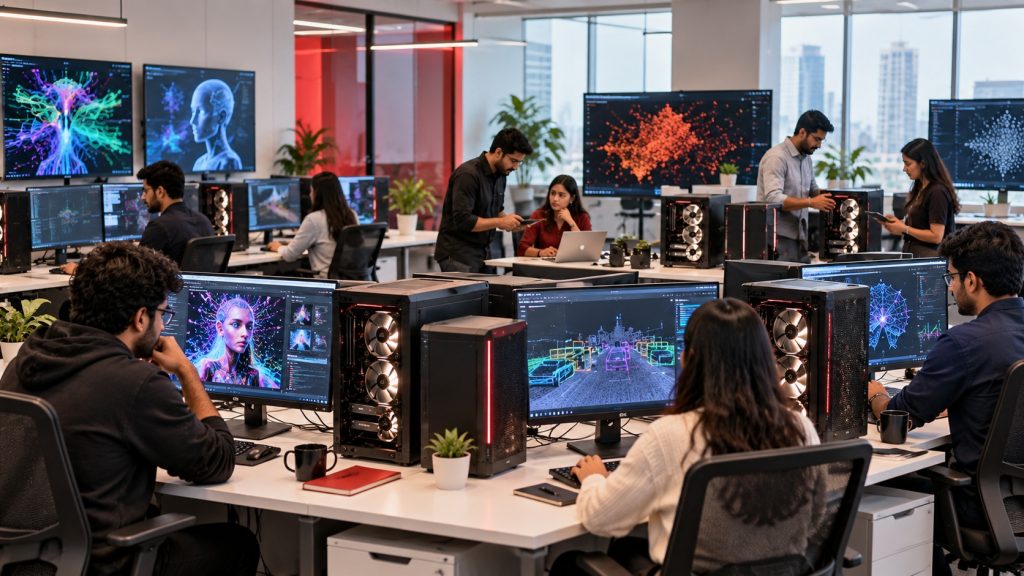
The decision does not need to be entirely rental or entirely ownership.
For some AI startups, a hybrid infrastructure strategy may be more practical.
The company can own baseline infrastructure that remains consistently utilized while renting additional GPU systems for temporary projects, development peaks, experiments, or new hires.
For example, a startup might own the workstations its core engineering team uses every day. Then, when a six-month client engagement requires another ten systems, it can rent that temporary capacity.
This approach can reduce idle capacity without forcing the company to rent every device indefinitely.
It also allows infrastructure planning to follow actual demand rather than maximum possible demand.
A Practical Framework for Making the Decision
Before approving either a purchase order or rental contract, founders and technology leaders should assess the workload itself.
Start with duration. A clearly defined short-term requirement deserves a different financial model from infrastructure expected to operate for several years.
Next, estimate utilization. Hardware that will operate close to capacity every day has a different ownership case from hardware required only during training cycles.
Then assess configuration stability. If GPU memory, architecture, or performance requirements are likely to change, flexibility carries more value.
Also evaluate capital allocation. For an early-stage startup, cash used for hardware cannot simultaneously fund engineering, sales, research, or product development.
Finally, compare the full economics rather than only the headline prices.
The objective is straightforward: match the financing model to the workload.
Common Questions About AI GPU Infrastructure
Is GPU on Rent suitable for AI model training?
Yes, provided the available configuration meets the model’s compute, memory, storage, software, and runtime requirements.
GPU memory is especially important. For instance, NVIDIA lists 48GB GDDR6 ECC memory for the RTX 6000 Ada and 96GB GDDR7 ECC for the RTX PRO 6000 Blackwell Workstation Edition.
Therefore, teams should select hardware based on the actual model and development environment rather than choosing a GPU based solely on its product tier.
Is GPU rental cheaper than purchasing?
Not necessarily.
GPU rental can reduce upfront expenditure and may improve economics for temporary or changing requirements. However, purchasing may become more economical when hardware is used consistently over a long period.
The correct comparison depends on rental duration, purchase price, utilization, maintenance, operating costs, depreciation, residual value, and upgrade requirements.
When should an AI startup consider buying GPUs?
Buying becomes more attractive when workloads are stable, utilization is consistently high, the configuration is unlikely to become unsuitable soon, and the business expects to use the hardware for several years.
In that case, ownership provides long-term access to an asset that the company controls.
When does renting make more sense than owning?
Rental deserves stronger consideration when the project has a defined end date, demand fluctuates, the team is scaling temporarily, configurations may change, or the company wants to avoid tying up significant capital in hardware.
For example, purchasing ten GPU workstations for a temporary six-month engagement creates a very different financial exposure from renting them specifically for that project.
Can startups rent GPU workstations in India?
Yes. AI and ML teams looking for physical GPU infrastructure can explore GPU workstations and other IT equipment through IndiaRENTALZ.
Before finalising a rental, businesses should confirm the exact GPU configuration, CPU, RAM, storage, quantity, location, rental duration, availability, deployment timeline, support terms, security deposit, logistics, and applicable taxes.
This is especially important for AI workloads because two systems described broadly as “GPU workstations” may offer substantially different performance and GPU memory.
Infrastructure Should Follow the Workload
For AI startups in 2026, the real decision is not whether renting is universally better than buying.
It is whether ownership creates enough long-term value to justify the capital commitment.
Buying can work well for stable, highly utilized infrastructure that will remain relevant for years. Rental can be better aligned with temporary projects, uncertain growth, changing configurations, and workloads where long-term utilization is difficult to predict.
A hybrid approach can also make sense: own the predictable baseline and rent additional capacity when projects demand it.
Ultimately, AI infrastructure should follow the workload—not the other way around.
Before committing capital, calculate expected utilization, project duration, total ownership cost, likely upgrade cycles, and the cost of unused capacity. That comparison will provide a far clearer answer than purchase price or monthly rent alone.