
Business growth often brings new hiring opportunities, but sudden recruitment can also create unexpected operational challenges. While HR teams focus on filling positions, IT departments must ensure that every new employee has access to suitable hardware from their joining date. In such situations, corporate laptop rental can help businesses arrange the required devices without delays associated with purchasing new equipment. When multiple employees join within a short period, managing laptop availability, device configurations, and deliveries becomes an important part of the onboarding process.
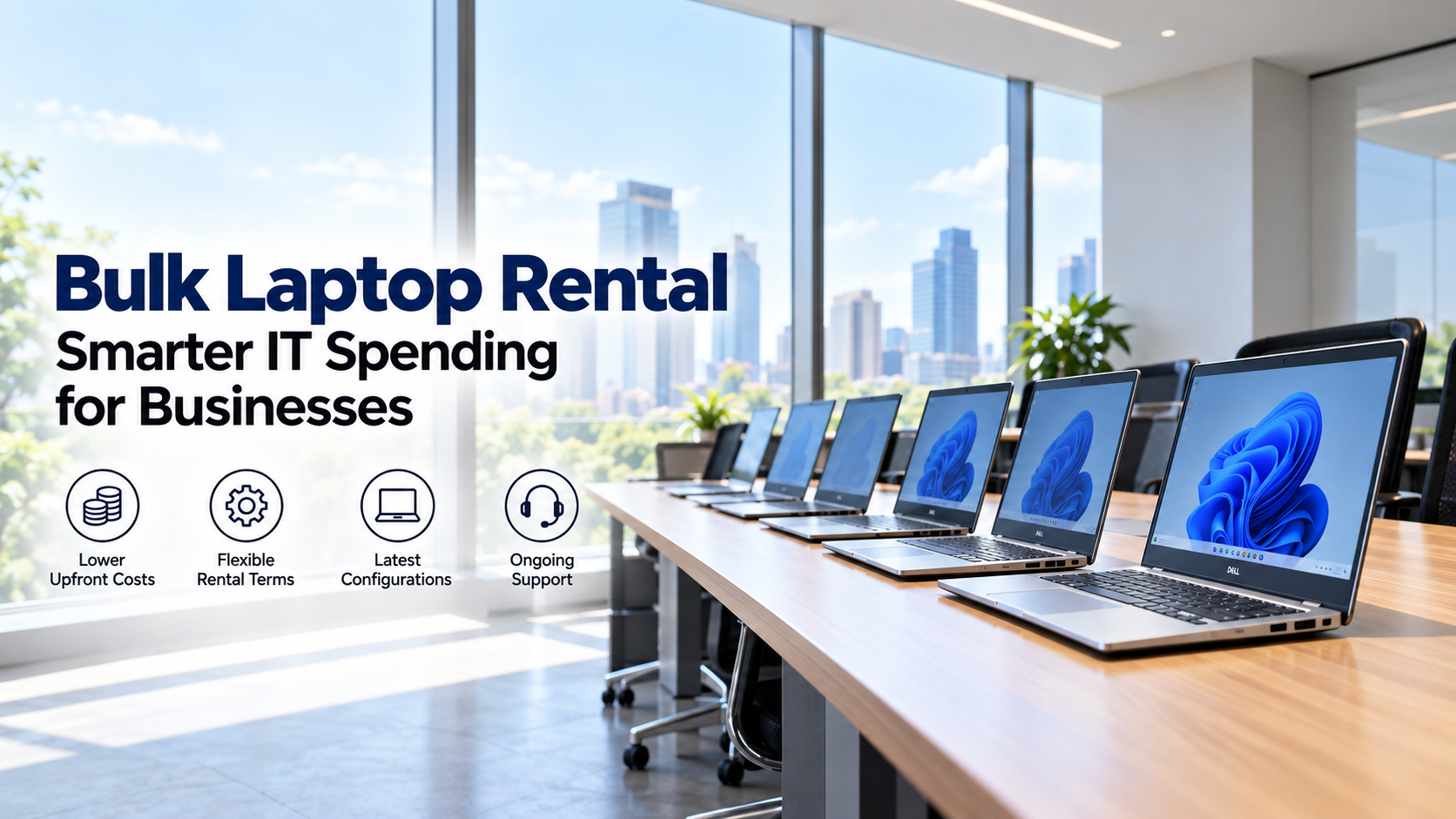
For growing organizations, renting laptops offers a practical way to manage these requirements without purchasing new devices for every hiring cycle. Companies can arrange laptops according to employee roles, project durations, and deployment locations while maintaining greater flexibility in IT procurement.
Whether a startup is expanding its workforce or an established company is recruiting employees across multiple cities, a structured rental approach can help reduce equipment-related delays and support a smoother onboarding experience.
The Hidden IT Challenges of Sudden Recruitment
Hiring employees and preparing their workstations are two connected processes. However, recruitment often progresses faster than hardware procurement.
Consider a software company that plans to hire 15 developers but unexpectedly secures a new project requiring 40 additional employees. Although the HR team may complete recruitment quickly, the IT department must arrange suitable laptops, install applications, and prepare devices for deployment.
Several challenges commonly arise during such situations:
- Limited hardware availability: Procurement teams may struggle to source identical laptop configurations in large quantities.
- Unexpected capital expenditure: Purchasing multiple devices simultaneously can place pressure on the IT budget.
- Device preparation: IT administrators must configure operating systems, security settings, and required applications.
- Coordination across departments: HR, finance, procurement, and IT teams must align approvals and joining dates.
- Multiple delivery locations: Remote employees and distributed offices require additional logistics planning.
As a result, companies need a procurement strategy that can respond to changing workforce requirements without creating unnecessary operational complications.
Corporate Laptop Rental as a Flexible Procurement Solution
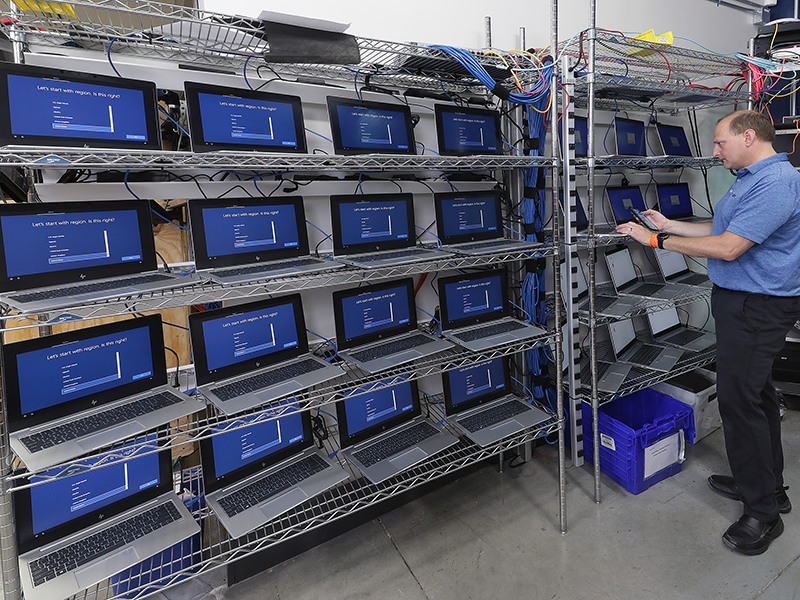
Traditional hardware procurement often follows a purchase-and-own model. While this works for organizations with stable requirements, it may not always suit companies experiencing unpredictable hiring patterns.
Corporate laptop rental provides an alternative by allowing businesses to access IT equipment for an agreed period instead of purchasing it outright.
For example, a company recruiting 30 customer support executives for a six-month project can explore rental laptops with suitable specifications. Once the project ends, the organization can return the devices according to the agreed terms rather than retain equipment it may no longer need.
Similarly, a growing technology company can arrange additional laptops for developers, designers, or administrative employees as its workforce expands.
This flexibility is particularly useful when companies cannot accurately predict future hiring requirements.
However, rental providers may have minimum tenure requirements, documentation procedures, and commercial conditions. Therefore, businesses should confirm these details before finalizing their procurement plans.
Faster Employee Onboarding Through Better Hardware Planning
A successful onboarding process involves more than completing paperwork and introducing employees to their teams. New hires also need functioning devices, relevant applications, and access to essential business systems.
Without these resources, employees may spend their initial working days waiting for equipment rather than completing training or assigned responsibilities.
To avoid such delays, HR and IT departments should coordinate hardware requirements alongside recruitment schedules.
For instance, when HR confirms 20 joining dates, the IT team can prepare a device requirement sheet covering employee roles, specifications, locations, and expected deployment dates.
A corporate laptop rental arrangement can support this planning by providing access to available devices through a defined procurement process.
Moreover, companies can request suitable configurations for different departments instead of purchasing identical devices for every employee.
Although rental arrangements can simplify sourcing, actual delivery timelines depend on inventory availability, technical requirements, location, and completion of necessary approvals.
Therefore, early communication remains essential for ensuring that equipment arrives before employees begin work.
Reducing Upfront Hardware Expenses During Hiring
Sudden workforce expansion can create a significant financial burden, especially when businesses need to purchase dozens of laptops at once.
Consider an organization hiring 50 employees. If each laptop costs approximately ₹45,000, purchasing the devices would require an initial investment of ₹22.5 lakh.
This amount excludes accessories, software licensing, technical support, and other associated expenses.
For startups and growing companies, allocating such a large amount toward hardware may affect other business priorities.
In comparison, renting spreads equipment costs across the agreed rental period, allowing organizations to avoid the full purchase expenditure at the beginning.
Additionally, laptop rental for new employees may help companies manage short-term staffing requirements without accumulating unnecessary IT assets.
However, reduced upfront expenditure does not always mean a lower overall cost. Rental charges, refundable deposits, logistics expenses, and contract duration influence the total financial commitment.
Consequently, procurement and finance teams should evaluate both options using the expected hardware usage period rather than comparing only the initial purchase price.
Corporate Laptop Rental for Distributed Business Teams

Many organizations now recruit employees across multiple cities rather than concentrating their workforce in one office.
For example, a company headquartered in Delhi may hire additional employees in Bengaluru, Hyderabad, Pune, and Chennai. Although recruitment decisions happen centrally, the company still needs to coordinate hardware deployment across these locations.
Managing several local suppliers can increase administrative work and complicate communication between departments.
In contrast, working with a rental provider offering multi-city service coverage can help businesses coordinate requirements through a more centralized process.
Companies can consolidate device specifications, quantities, delivery addresses, and rental durations before arranging deployment.
Furthermore, standardizing laptop configurations across locations can simplify software management and technical support.
For multinational companies establishing teams in India, this approach may also reduce the need to maintain substantial local hardware inventory.
Nevertheless, businesses should verify delivery coverage, logistics charges, support arrangements, and device return procedures for each location before proceeding.
Choosing Suitable Laptop Configurations for New Hires
Different employee roles require different levels of computing performance. Therefore, businesses should avoid selecting laptops based solely on price or availability.
Instead, IT teams should evaluate the applications employees will use and the performance required for their daily responsibilities.
Administrative and HR Teams
Employees handling documentation, spreadsheets, email communication, and video meetings generally need reliable business laptops with sufficient memory and storage.
Software Developers
Development teams may require higher-performance processors, additional RAM, and faster SSD storage, depending on their programming environments and workloads.
Creative Professionals
Video editors, graphic designers, and other creative employees often need powerful processors, suitable graphics capabilities, and displays that support their work.
Customer Support and BPO Teams
Call centers generally benefit from standardized devices that support communication software, browser-based applications, and everyday multitasking.
By matching hardware specifications to actual responsibilities, companies can avoid unnecessary expenditure on high-end systems for basic tasks.
Additionally, consistent configurations within departments can make deployment and troubleshooting easier for IT administrators.
Managing Temporary and Project-Based Workforce Requirements
Not every hiring requirement represents permanent workforce expansion.
Businesses frequently recruit additional employees for seasonal demand, client projects, training programs, or short-term operational requirements.
For instance, a BPO company may need 60 additional systems for a temporary customer support campaign. Similarly, an IT services company might hire developers for a project with a defined completion date.
Purchasing hardware for these situations can create long-term ownership responsibilities even after employees complete their assignments.
Corporate laptop rental can provide greater flexibility by allowing businesses to explore rental durations aligned with their operational requirements.
Furthermore, companies can evaluate whether their existing devices can support future hiring before committing to additional purchases.
However, rental agreements may include minimum commitments and early termination conditions. Therefore, organizations should review the complete commercial terms when planning temporary requirements.
This approach helps businesses balance equipment availability with realistic workforce forecasts.
Renting Versus Buying During Workforce Growth
Both renting and purchasing laptops can support employee onboarding. However, the most suitable option depends on how long the organization expects to use the devices.
Advantages of Renting
- Lower initial hardware expenditure in many situations
- Flexible options for temporary or project-based hiring
- Access to different configurations based on availability
- Potential maintenance and replacement support under agreed service terms
- Reduced responsibility for retaining unused hardware after the rental period
Limitations of Renting
- Recurring rental expenses
- Minimum rental tenure requirements
- Refundable security deposits, where applicable
- Dependence on provider availability
- Return procedures and contractual obligations
Advantages of Buying
- Complete ownership of equipment
- Potentially lower long-term costs
- Freedom to retain devices for future requirements
- Greater control over hardware lifecycle decisions
Limitations of Buying
- Higher upfront investment
- Ongoing maintenance responsibilities
- Hardware depreciation
- Storage and disposal of outdated devices
- Risk of unused equipment after temporary projects
For organizations with stable employee numbers and long-term hardware requirements, purchasing may be financially beneficial.
Conversely, renting can be a practical choice when hiring volumes fluctuate or project durations remain uncertain.
Therefore, companies should compare total costs, operational requirements, and expected equipment usage before making a decision.
Corporate Laptop Rental and Standardized IT Deployment
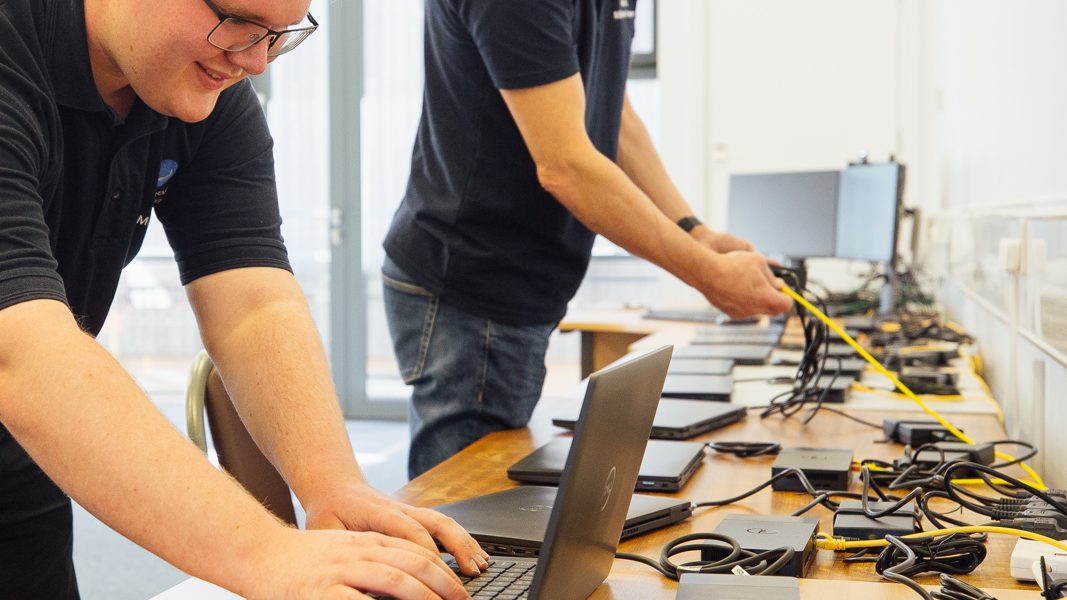
Rapid hiring sometimes leads organizations to purchase different laptop models from multiple vendors. Over time, this can create inconsistencies in performance, software compatibility, and maintenance requirements.
For IT administrators, managing a wide variety of devices may increase the complexity of routine support activities.
A structured corporate laptop rental strategy can help businesses define standard configurations for specific employee categories.
For example, a company can establish one specification for administrative employees, another for developers, and a separate configuration for design teams.
This approach can simplify hardware allocation, software installation, and device replacement planning.
Additionally, companies should maintain accurate records of assigned equipment, employee details, and expected return dates.
IT teams must also implement appropriate security controls, including device encryption, access management, and secure data removal procedures.
Together, standardized hardware and clear asset records can support more organized IT operations during workforce expansion.
Practical Steps for Managing Laptop Requirements
Organizations can improve hardware readiness by establishing a clear process that connects recruitment plans with IT procurement activities.
1. Share Hiring Forecasts Early
HR teams should communicate expected hiring numbers, employee roles, and joining dates with IT and procurement departments.
2. Define Technical Requirements
IT managers should identify suitable configurations based on employee responsibilities and software requirements.
3. Estimate Equipment Usage Periods
Businesses should distinguish between permanent employees, temporary staff, and project-based hiring to evaluate appropriate rental durations.
4. Confirm Deployment Locations
Companies should prepare accurate delivery addresses and identify employees working remotely or across different offices.
5. Compare Commercial Terms
Procurement teams should review rental charges, deposits, logistics, maintenance support, replacement conditions, and minimum tenure requirements.
6. Complete Documentation in Advance
Finally, organizations should arrange company verification documents, approvals, and payment formalities before the planned deployment.
Following these steps can reduce avoidable coordination delays and help employees receive suitable equipment closer to their joining dates.
Common Questions About Laptop Rentals for Growing Teams
Is Corporate Laptop Rental Suitable for Companies Hiring Multiple Employees?
Yes. Businesses recruiting several employees simultaneously can use rental arrangements to source laptops according to their quantity, configuration, and duration requirements. However, availability and delivery schedules should be confirmed with the provider.
Is Laptop Rental for New Employees More Cost-Effective Than Buying?
Renting can reduce upfront expenditure, particularly when businesses need devices for temporary assignments or uncertain hiring periods. However, purchasing may offer better long-term value when organizations expect to use the same equipment for several years.
Can Businesses Rent Laptops for Remote Employees Across India?
Yes. Some corporate IT rental providers offer delivery services across multiple Indian cities. Companies should confirm location coverage, logistics charges, technical support, and return arrangements before finalizing their requirements.
What Should Companies Consider Before Renting Laptops in Bulk?
Businesses should evaluate hardware specifications, quantity, rental duration, delivery locations, commercial terms, documentation requirements, and technical support arrangements. Additionally, they should review maintenance and replacement conditions to understand the complete service offering.
Where Can Businesses Find Corporate Laptop Rental Services in India?
Businesses looking for flexible IT equipment solutions can explore IndiaRENTALZ, a provider of laptop, desktop, MacBook, and workstation rental services across India.
IndiaRENTALZ caters to corporate hardware requirements, including bulk device deployments and equipment needs for growing teams. Organizations can share their required specifications, quantities, rental duration, and delivery locations to receive a customized quotation.
Service availability, commercial terms, and delivery schedules depend on the specific requirement and completion of applicable procedures.
Conclusion
Sudden hiring can create pressure on IT procurement, budgeting, and employee onboarding, especially when companies need multiple devices within a limited period.
However, businesses can manage these challenges more effectively by planning hardware requirements alongside recruitment activities.
Corporate laptop rental offers an alternative to purchasing additional equipment for every hiring cycle. It can support temporary workforce expansion, multi-location deployment, and changing technical requirements while reducing the need for substantial upfront hardware investment.
Ultimately, the right decision depends on employee needs, rental duration, operational priorities, and a realistic comparison of ownership and rental costs.
For organizations preparing to expand their teams, IndiaRENTALZ offers corporate IT rental solutions that can be evaluated according to specific business requirements.
Expanding Your Team? Plan Your IT Requirements with IndiaRENTALZ.
Visit www.indiarentalz.com to explore rental options and request a customized quotation for your workforce.