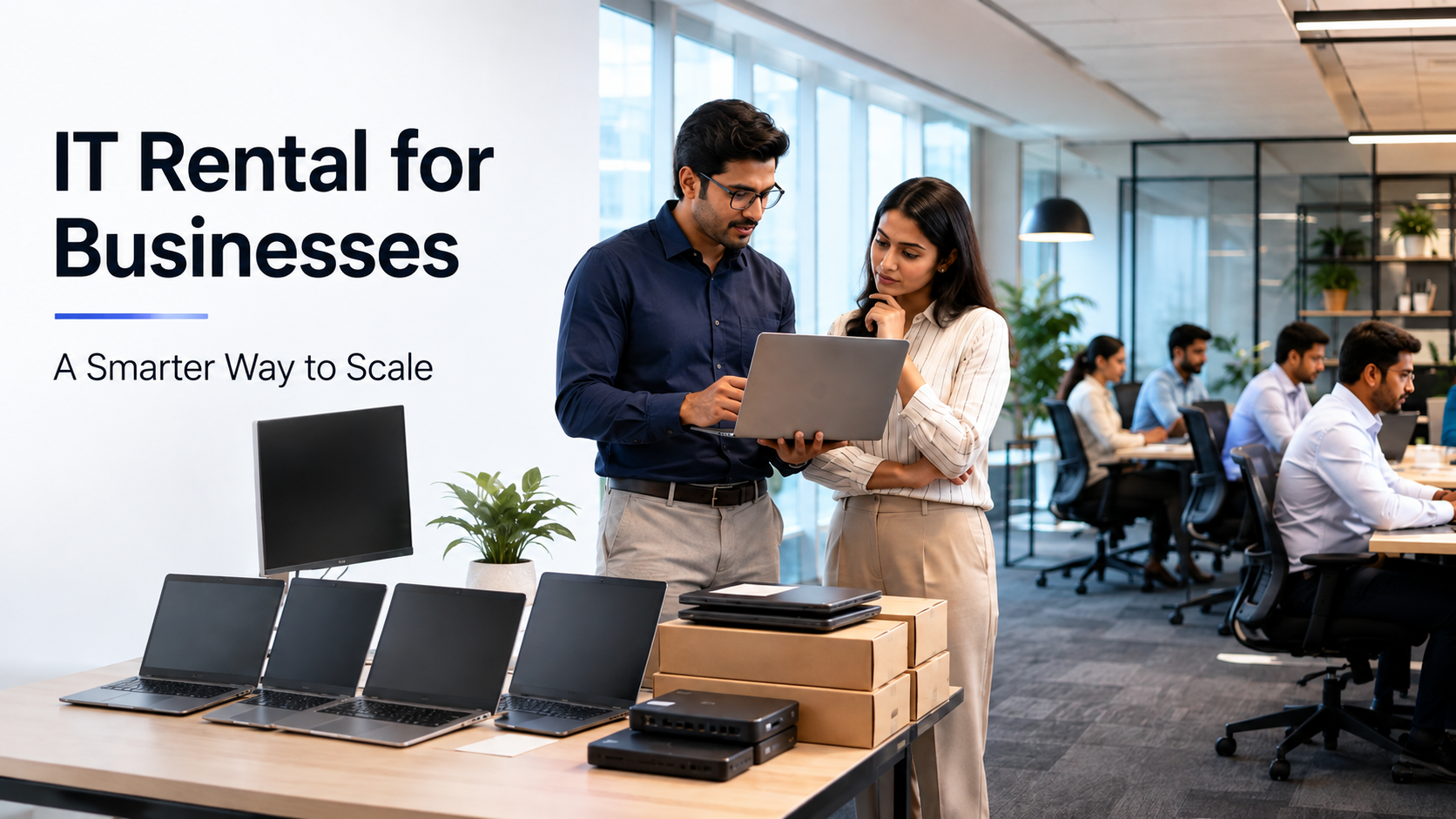
For years, purchasing laptops, desktops, workstations, and other IT equipment was considered the standard way to build business infrastructure. However, with changing workforce needs and faster technology cycles, IT rental for businesses has become an increasingly practical alternative to outright ownership. If a company hired more employees, it traditionally purchased more devices, and if a new project started, more systems were added to the inventory. Today, businesses operate differently. Teams expand and contract, projects have shorter timelines, employees work across multiple locations, and technology changes faster than traditional procurement cycles.
This does not mean that purchasing IT equipment has become irrelevant. Instead, the more practical approach is to align procurement with usage, business duration, workforce stability, and financial priorities.
IT Rental for Businesses Supports Flexible Growth
Business requirements rarely remain constant throughout the year. A company may onboard 30 employees for a new project, add interns for three months, open a temporary office, or build a development team for a specific client contract.
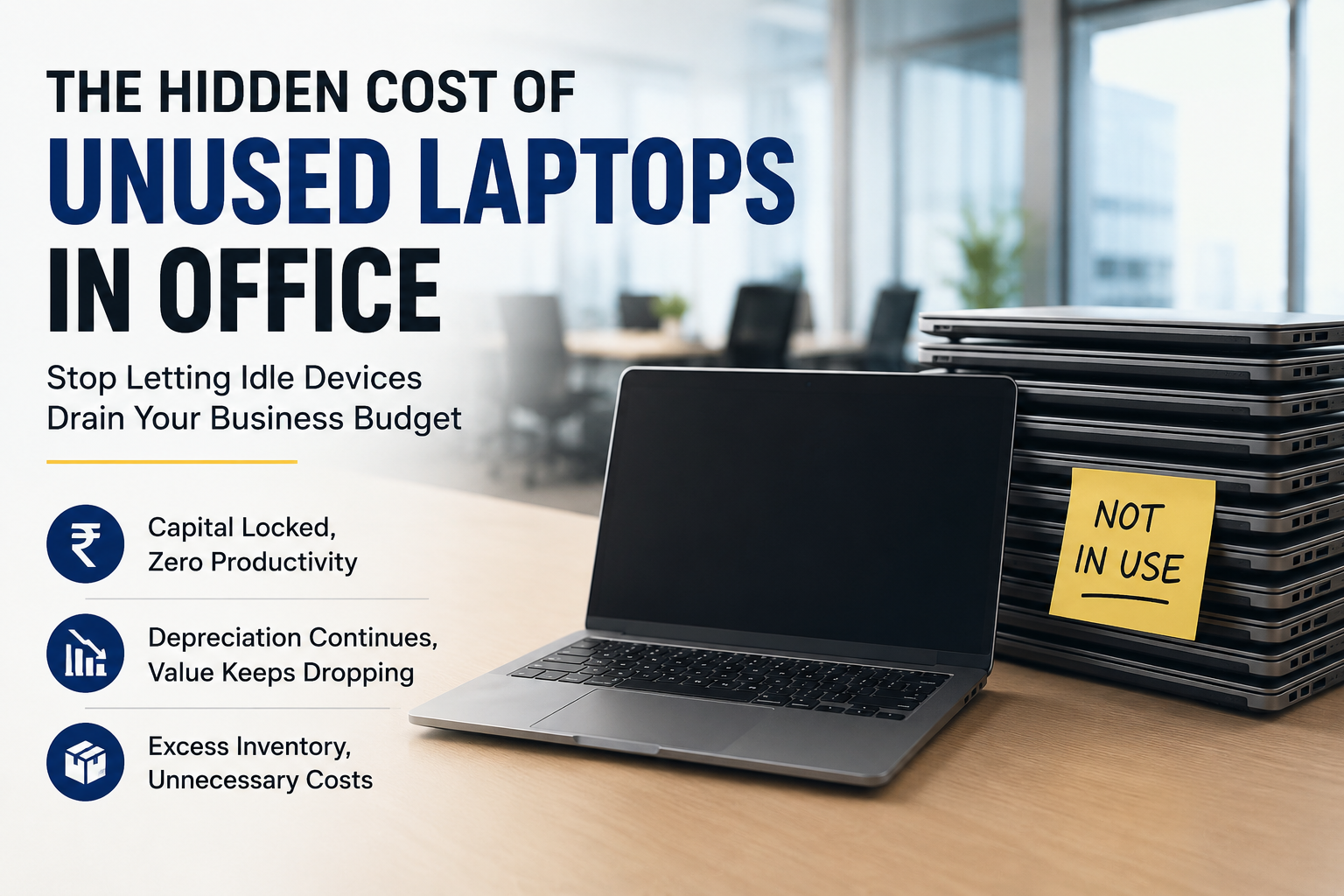
Purchasing devices for every temporary requirement can create unnecessary long-term inventory. Once the requirement ends, those laptops or desktops may remain unused despite continuing to depreciate.
With IT rental for businesses, organizations can match device availability more closely with actual workforce demand. Therefore, businesses can increase or reduce their IT infrastructure without treating every temporary requirement as a permanent investment.
This approach can be particularly useful for:
- New employee onboarding
- Temporary and contractual teams
- Seasonal workforce expansion
- Training programs
- Client-specific projects
- Remote employee deployments
- Events and conferences
- Short-term testing or development environments
- Specialized workstation requirements
Consequently, IT infrastructure becomes more adaptable to business operations rather than remaining tied to fixed asset ownership.
Capital Allocation Matters More Than Device Ownership
Every device purchased by a company represents capital that cannot immediately be used elsewhere.
For example, if a growing organization requires 100 laptops, purchasing all of them can create a significant upfront expense. While those systems may be necessary for operations, ownership itself may not create additional strategic value.
Founders and finance teams must therefore consider the opportunity cost.
Capital used for IT hardware could potentially support:
- Recruitment
- Sales expansion
- Marketing
- Product development
- Working capital
- New office locations
- Customer acquisition
This becomes especially relevant for startups and rapidly scaling organizations. Although owning devices can make financial sense when requirements are predictable over several years, renting may provide greater flexibility when the future headcount or project pipeline remains uncertain.
The decision should therefore focus less on whether a company can purchase equipment and more on whether purchasing is the best allocation of its available capital.
IT Rental for Businesses Reduces Idle Hardware Risk
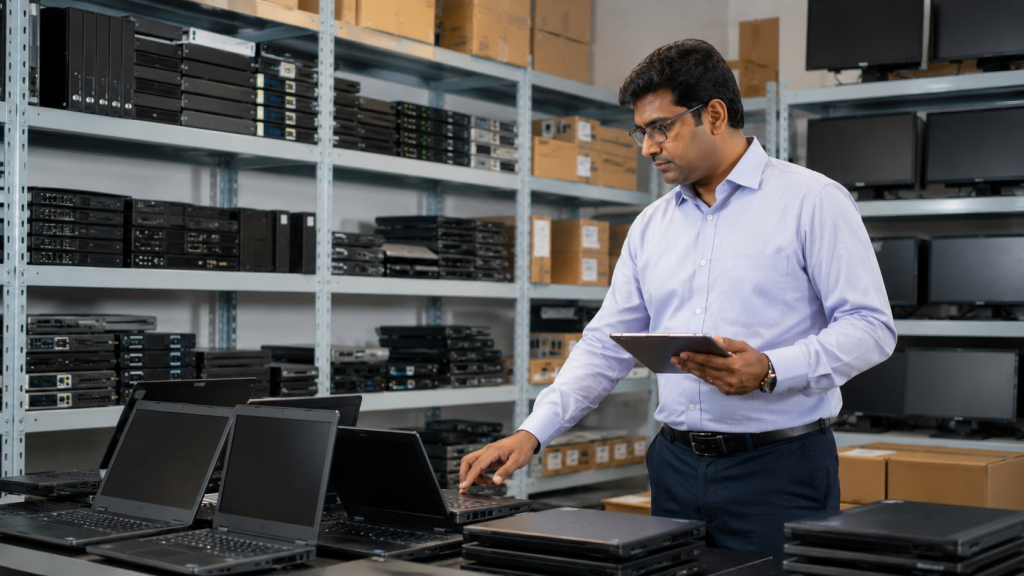
Unused technology is one of the less visible costs of IT procurement.
Imagine a company purchases 80 laptops for a large project. Six months later, the project ends and only 50 devices remain actively required. The remaining 30 laptops may sit in storage waiting for another requirement.
However, those systems continue to age.
Their market value declines, warranty periods continue running, newer processors enter the market, and operating requirements may change. Moreover, additional effort may be required to securely store, audit, maintain, and redeploy those devices.
Using IT rental for businesses for variable requirements can reduce this mismatch between asset ownership and actual utilization.
Organizations can instead maintain ownership of hardware used by stable teams while renting additional systems when demand increases.
Therefore, the business pays for infrastructure closer to when it is actually required rather than building inventory around uncertain future needs.
Technology Refresh Cycles Are Becoming Shorter
Modern workplace technology evolves quickly.
Processor generations change regularly, memory requirements increase, software becomes more demanding, and specialized applications may require newer GPUs or hardware capabilities. In addition, operating systems and enterprise security tools can introduce new compatibility requirements.
This creates another challenge for companies that purchase large quantities of devices.
A laptop purchased today may continue working for several years, but its suitability for a specific workload may decline much earlier.
For example, a standard business laptop may remain adequate for documentation and web-based applications. However, teams working with video production, software development, AI workloads, 3D applications, or large datasets may require significantly more powerful machines.
Rental can therefore provide another procurement option when businesses need access to different specifications without permanently purchasing every hardware configuration.
Rent vs Buy IT Equipment Depends on the Requirement
The rent vs buy IT equipment decision should not be treated as an all-or-nothing choice.
Both procurement models have valid use cases.
Purchasing can work well when:
- The requirement is expected to remain stable for several years.
- Employees use similar configurations over long periods.
- The business has sufficient capital available.
- Internal teams can manage maintenance and asset lifecycle activities.
- Long-term ownership provides a clear cost advantage.
Renting may be more suitable when:
- Workforce numbers change frequently.
- The project has a defined duration.
- A company needs devices quickly for onboarding.
- Employees work across multiple locations.
- Specialized hardware is required temporarily.
- Technology requirements change frequently.
- The company wants to avoid excess inventory.
Therefore, businesses should compare total usage, duration, support requirements, financial impact, and expected residual value rather than evaluating only the monthly rental cost against the purchase price.
IT Rental for Businesses Can Simplify Workforce Changes

Employee onboarding is no longer limited to preparing a desk inside a central office.
Businesses increasingly employ people across different cities, establish temporary project teams, work with consultants, and hire remote employees. As a result, IT deployment has become an operational challenge as much as a procurement decision.
A company might need five laptops in Delhi, another ten in Bengaluru, three in Hyderabad, and several devices delivered directly to remote employees.
Purchasing every device centrally can introduce additional processes such as inventory handling, packaging, logistics, tracking, support, and reverse logistics when an employee exits.
In contrast, IT rental for businesses can help companies plan temporary or distributed requirements without permanently increasing their internal device inventory.
For HR and operations teams, this can make workforce expansion easier to coordinate, particularly when hiring happens faster than traditional procurement cycles.
A Hybrid IT Strategy Creates Better Asset Utilization
For many organizations, the strongest approach is not choosing between complete ownership and complete rental.
Instead, businesses can divide IT infrastructure into two categories: core requirements and variable requirements.
Core infrastructure could include devices used by permanent employees whose roles and hardware requirements are unlikely to change.
Variable infrastructure could include equipment required for:
- New projects
- Temporary employees
- Short contracts
- Seasonal hiring
- Training batches
- Remote teams
- Events
- Testing environments
- High-performance workloads
This hybrid approach allows a company to retain control over long-term assets while keeping additional capacity flexible.
For example, a company with 150 permanent employees might own 120–130 devices that remain consistently utilized. Meanwhile, additional laptops required during rapid hiring periods could be rented.
As business demand changes, the rented portion can adjust without leaving the company with large quantities of unused hardware.
Therefore, better IT strategy is increasingly about utilization rather than simply ownership.
Procurement Teams Need to Evaluate Total Business Cost
Purchase price alone does not represent the complete cost of IT ownership.
When evaluating hardware procurement, businesses should also consider costs associated with:
- Device depreciation
- Maintenance
- Repairs
- Storage
- Inventory management
- Logistics
- Asset tracking
- Replacement requirements
- Technology upgrades
- Disposal or resale
Likewise, rental should not automatically be considered cheaper in every scenario. Long-term requirements may sometimes justify purchasing, especially when devices remain productive throughout their expected lifecycle.
A useful procurement process should therefore start with several operational questions:
- How many devices are required?
- How long will they be required?
- Are employee numbers likely to change?
- Will the same specifications remain suitable?
- How much internal support will ownership require?
- What happens to the equipment after the requirement ends?
- Is preserving working capital important?
- Are users located in one office or across multiple cities?
Answering these questions makes the decision more objective and prevents procurement from becoming an automatic purchase exercise.
Building a More Flexible IT Procurement Model
Businesses can improve their infrastructure strategy by categorizing requirements before placing an order.
Start with predictable demand. Identify the employees, departments, and systems that will almost certainly remain active for several years. Ownership may make sense for this category.
Next, identify uncertain requirements. These can include temporary projects, expected hiring, expansion into new cities, pilot teams, interns, consultants, and contractual employees.
Finally, separate specialized requirements. Powerful graphics workstations, premium laptops, MacBooks, gaming systems, servers, or other configurations may only be required by particular teams for limited periods.
Once requirements are separated into these categories, the procurement team can determine where ownership creates long-term value and where rental maintains flexibility.
This approach also encourages stronger asset utilization because every purchase must be justified against its expected operational lifecycle.
Common Questions About Modern IT Procurement
Is IT rental for businesses better than purchasing devices?
Neither option is universally better.
Purchasing can be efficient for stable, long-term requirements, while rental can offer greater flexibility for temporary projects, changing headcounts, remote employees, and specialized hardware needs.
The strongest strategy is often a combination of both. Businesses can own devices that remain consistently utilized while renting additional infrastructure whenever requirements fluctuate.
When should a company rent instead of buy IT equipment?
Rental is particularly relevant when a company knows that the requirement is temporary or uncertain.
For example, businesses may consider renting equipment when onboarding employees for a six-month project, opening a temporary location, running a training program, deploying devices to remote staff, or requiring powerful workstations for a specific assignment.
In these situations, purchasing may create assets that have limited use once the requirement finishes.
Does renting IT equipment reduce business costs?
It can reduce certain costs, particularly upfront capital requirements and expenses associated with unused equipment.
However, the financial benefit depends on rental duration, hardware specification, quantity, support requirements, and the company’s existing IT infrastructure.
Therefore, organizations should compare the total cost of ownership with the total rental cost rather than comparing only the purchase price with one month’s rent.
What IT equipment can businesses typically rent?
Depending on the provider, organizations can usually source a wide range of business technology, including laptops, desktops, MacBooks, monitors, high-performance workstations, servers, tablets, printers, projectors, and related IT equipment.
This can allow companies to create different configurations for different departments rather than purchasing one standard specification for every employee.
Where can businesses rent laptops and IT equipment in India?
Businesses looking for flexible IT infrastructure across India can explore IndiaRENTALZ at indiarentalz.com.
IndiaRENTALZ provides laptops, MacBooks, desktops, workstations, monitors, servers, and other IT equipment on rent for corporate requirements. Businesses can use rental infrastructure for employee onboarding, project teams, remote deployments, temporary requirements, events, and changing workforce needs across multiple locations.
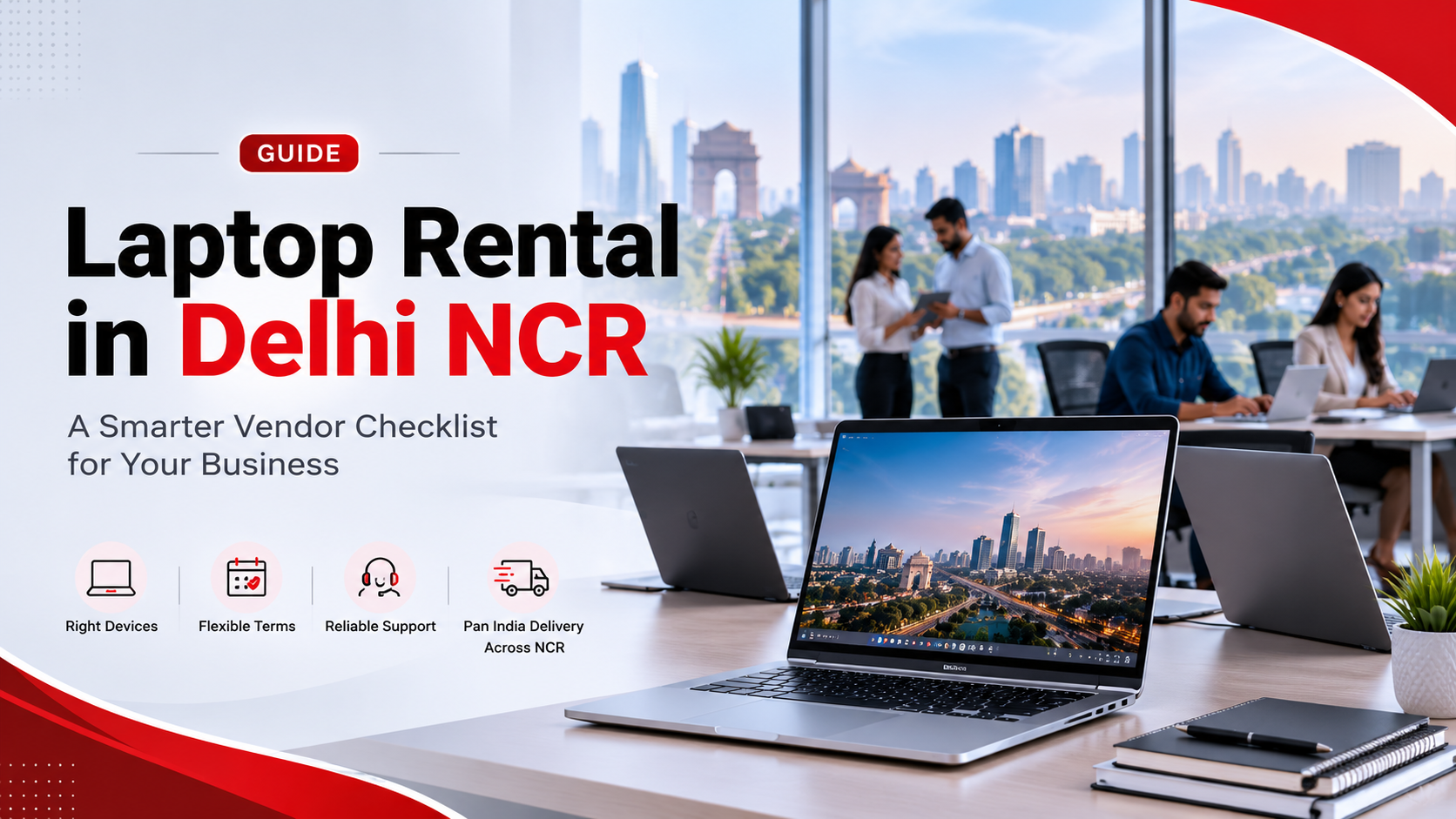
Before selecting any provider, companies should compare device availability, configuration options, rental tenure, delivery coverage, support terms, replacement policies, and overall commercial conditions.
Smarter IT Strategy Starts With Utilization
The role of IT procurement is changing.
Businesses no longer need to assume that every new employee, project, or technology requirement must result in another permanent asset purchase. Instead, companies can evaluate hardware according to its expected usage, duration, financial impact, and operational value.
For stable requirements, ownership can remain highly practical. However, temporary projects, changing headcounts, distributed teams, and rapidly evolving technology create situations where flexibility becomes equally important.
Ultimately, the strongest IT strategy is not based on owning the largest inventory. It is based on ensuring that the right technology is available when employees need it without leaving unnecessary assets sitting unused afterward.
By combining ownership with rental where appropriate, businesses can build an IT infrastructure model that remains efficient, scalable, and better aligned with how modern organizations actually operate.