Business projects depend on many things, including skilled employees, clear timelines, and reliable technology. However, even a well-planned project can face unexpected challenges when the required laptops are unavailable. This is where Laptop Rental for Businesses becomes a practical solution, especially when sudden team expansion, delayed equipment procurement, or technical failures leave employees without the devices they need to work.
For companies managing multiple projects, these shortages can affect productivity, employee efficiency, and important deadlines.
Instead of depending entirely on purchasing new equipment, companies can arrange additional laptops for immediate or temporary requirements.
With proper planning and a reliable IT rental provider, businesses can manage unexpected hardware demands while maintaining operational continuity.
Understanding the Impact of Sudden Laptop Shortages
Laptop shortages can occur even in organizations with established IT infrastructure. Although companies usually plan equipment purchases according to their workforce requirements, business needs do not always follow a predictable schedule.
For example, a software development company may receive a new client project that requires 30 additional developers. While the recruitment team can hire employees within a few weeks, purchasing and configuring 30 new laptops may take longer.
As a result, employees may join the organization without having the necessary equipment to begin their responsibilities.
Similar situations can arise when:
- New projects require additional employees within short timelines.
- Existing laptops develop hardware or performance issues.
- Procurement approvals or supplier deliveries take longer than expected.
- Temporary employees join for seasonal or contract-based work.
- Organizations expand operations into new cities.
- Training sessions or corporate events require additional devices.
Consequently, the issue extends beyond equipment availability. It can also affect project execution, resource allocation, and overall business efficiency.
Common Operational Challenges Caused by Device Shortages
When employees cannot access suitable laptops, organizations may experience several operational difficulties.
Reduced employee productivity: Employees without working devices cannot complete assigned tasks efficiently. Furthermore, sharing equipment between team members can interrupt daily workflows.
Delayed project execution: Development, testing, customer support, and other technology-dependent activities may slow down when teams lack adequate hardware.
Additional pressure on IT teams: IT administrators may need to rearrange available devices, troubleshoot older systems, or prioritize certain departments over others.
Unexpected procurement expenses: Urgent hardware purchases can create unplanned expenditure, particularly when businesses need several laptops simultaneously.
Complicated employee onboarding: HR departments may complete recruitment activities on schedule, but new employees cannot begin productive work without the required equipment.
Therefore, businesses need an equipment management approach that can respond to sudden changes without creating additional operational difficulties.
Laptop Rental for Businesses During Unexpected IT Requirements
Organizations often maintain a fixed inventory of laptops based on their existing workforce. However, when demand increases unexpectedly, purchasing additional equipment is not always the most practical immediate solution.
Laptop Rental for Businesses allows companies to arrange devices according to changing workforce requirements, project duration, and technical specifications.
For instance, an IT company handling a six-month development project may require 20 additional laptops. Instead of purchasing devices that may remain unused after the project ends, the company can explore a rental arrangement for the required period.
This approach offers several operational advantages:
- Access to additional laptops without a lengthy purchasing cycle, subject to availability.
- Flexible device quantities according to project requirements.
- Configuration options for different employee roles.
- Rental periods aligned with temporary or extended assignments.
- Technical support and replacement arrangements according to the service agreement.
Moreover, rental services can complement an organization’s existing IT inventory rather than replace it entirely.
This combination allows companies to maintain their regular equipment while arranging additional devices when necessary.
Immediate Steps to Manage Equipment Shortages
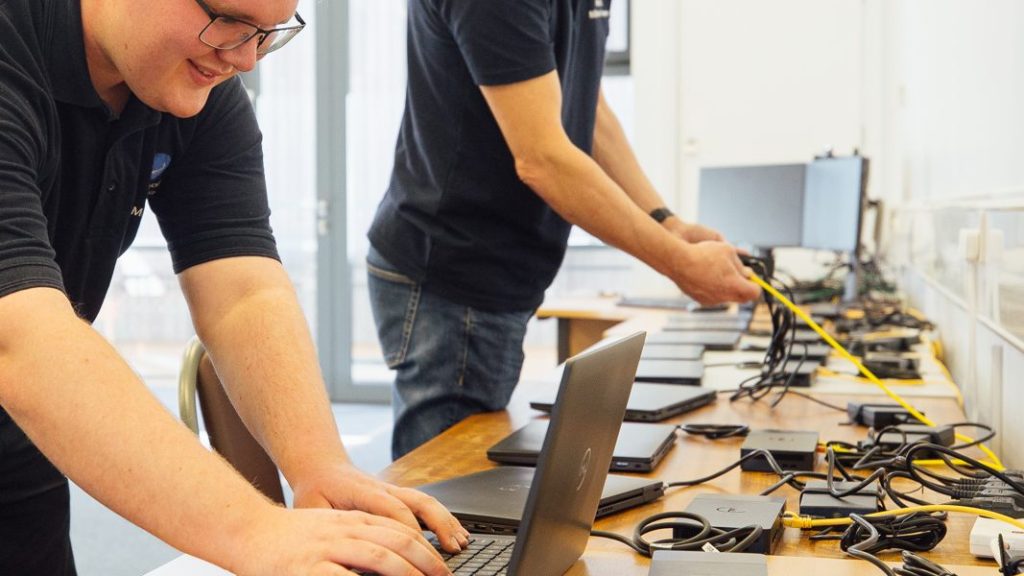
Before arranging additional laptops, businesses should assess the situation carefully. A structured response can prevent unnecessary expenses and ensure that the right employees receive suitable devices.
Identify Critical Device Requirements
The first step involves understanding which departments or employees need laptops most urgently.
For example, employees working on client deliverables may require immediate access, while devices for upcoming internal training sessions may have a more flexible timeline.
IT teams should document the quantity, location, specifications, and expected deployment date for each requirement.
Review Existing Hardware Availability
Next, organizations should check whether they have unused, spare, or recently returned laptops that can meet immediate requirements.
However, these devices should undergo basic performance and security checks before reassignment.
Separate Temporary and Long-Term Needs
Not every laptop requirement justifies a permanent hardware purchase.
A three-month project, short-term training program, or temporary staffing requirement may need equipment for a limited period.
By identifying the expected usage duration, companies can decide whether purchasing or renting better supports their operational needs.
Coordinate With an IT Rental Provider
Once the requirements are clear, businesses can approach a rental provider with complete specifications and delivery details.
Sharing accurate information early helps the provider evaluate stock availability, configuration suitability, commercial terms, and deployment feasibility.
Laptop Rental for Businesses With Expanding Project Teams
Rapid team expansion can create equipment shortages even when organizations have sufficient resources for their regular operations.
This situation frequently occurs in software development companies, BPOs, customer support centers, and businesses managing outsourced projects.
For instance, a BPO company may receive a new customer support contract that requires 100 additional employees. Although the organization has the office space and workforce ready, arranging the required computing devices can become an operational challenge.
In such situations, Laptop Rental for Businesses can support expansion by providing an alternative way to source equipment for new teams.
Companies can select devices based on different business functions:
- Customer support teams: Laptops suitable for CRM platforms, communication tools, and everyday office applications.
- Software developers: Systems with suitable processors, memory, and storage for development workloads.
- Finance and administrative teams: Devices for spreadsheets, accounting software, reporting, and business applications.
- Creative professionals: High-performance laptops or workstations for editing, design, and rendering applications.
Additionally, standardizing configurations within departments can simplify software installation, troubleshooting, and ongoing IT support.
As teams grow, organizations can evaluate additional rental requirements instead of making every hardware decision through a separate purchasing cycle.
Urgent Laptop Rental for Time-Sensitive Operations

Some equipment requirements cannot wait for regular procurement procedures.
A hardware failure before an important client presentation, an unexpected training batch, or an urgent project deployment may require a faster arrangement.
In these circumstances, Urgent Laptop Rental can provide an alternative, depending on device stock, delivery location, and operational capacity.
However, arranging laptops quickly involves more than confirming their availability.
Businesses should verify several important details before finalizing an order:
- Device specifications: Confirm that the processor, RAM, storage, and operating system match the intended workload.
- Quantity availability: Check whether the provider can supply the required number of devices.
- Delivery feasibility: Confirm the expected dispatch and delivery schedule for the destination.
- Device readiness: Understand the quality checks, software requirements, and configuration process.
- Technical assistance: Review the available troubleshooting and replacement support.
- Commercial terms: Clarify the rental period, security deposit, billing cycle, and applicable logistics charges.
Furthermore, companies should communicate their expected project start date clearly rather than assuming immediate delivery.
This helps both parties establish realistic deployment expectations.
Laptop Rental for Businesses Across Multiple Office Locations
Managing technology requirements becomes more complex when employees work across different cities.
A company headquartered in Delhi may operate development teams in Bengaluru, customer support teams in Hyderabad, and administrative offices in Mumbai.
When new projects begin simultaneously across these locations, coordinating hardware procurement can place additional pressure on internal IT teams.
Laptop Rental for Businesses can help organizations manage distributed equipment requirements through a coordinated sourcing approach.
For example, a company onboarding employees in several cities can share a consolidated requirement covering device quantities, configurations, delivery addresses, and expected joining dates.
This allows the rental provider to evaluate the requirements location by location.
Moreover, working with a provider that supports multiple regions can simplify communication, documentation, and equipment coordination.
However, businesses should still confirm individual location coverage, delivery timelines, and on-site support availability before committing to a deployment plan.
Creating a Reliable IT Equipment Contingency Plan
Although rental services can address immediate shortages, organizations should also focus on preventing recurring equipment gaps.
A practical contingency plan helps IT teams prepare for situations where device demand exceeds available inventory.
Maintain accurate asset records. Track assigned, available, faulty, and returned devices to understand existing hardware capacity.
Coordinate workforce forecasts. Encourage HR, project management, and operations teams to communicate upcoming hiring requirements in advance.
Define minimum spare inventory. Maintain a reasonable number of backup laptops for critical functions, based on business size and operational risk.
Establish rental procurement procedures. Identify approved rental vendors, necessary documentation, and internal approval responsibilities before urgent requirements arise.
Review replacement and support arrangements. Understand how quickly faulty devices can receive technical assistance or replacements under the agreed service terms.
Evaluate utilization regularly. Review equipment demand after major projects to improve future capacity planning.
Together, these practices can help organizations respond more effectively to sudden changes while avoiding unnecessary hardware expenditure.
Common Questions About Business Laptop Requirements
How Can Laptop Rental for Businesses Support Urgent Projects?
Laptop rental services allow organizations to source additional devices for projects without necessarily purchasing permanent hardware.
Companies can specify the required quantity, configuration, rental duration, and delivery location. The provider can then confirm suitable options based on stock availability and service coverage.
This approach is particularly useful for temporary project teams, unexpected hiring, and short-term operational requirements.
Can Companies Rent Laptops in Bulk for Short-Term Projects?
Yes, many corporate IT rental providers offer bulk laptop rentals for temporary and long-term business requirements.
The available quantity, minimum rental period, device specifications, and delivery arrangements depend on the provider.
Before placing an order, businesses should confirm the commercial terms and availability for their specific project.
What Is the Best Way to Arrange Laptops for New Employees?
Organizations should coordinate hiring schedules with IT asset planning.
HR teams can share upcoming joining dates and employee roles, while IT administrators identify the appropriate device configurations.
When internal inventory is insufficient, companies can explore rental options to cover the additional requirement.
Is Renting Better Than Purchasing for Temporary IT Requirements?
Renting may be more suitable when businesses require laptops for limited-duration projects, temporary employees, or fluctuating workloads.
Purchasing, however, may be preferable for equipment that employees will use continuously over several years.
The decision should consider total cost, device utilization, maintenance responsibilities, rental terms, and the expected duration of use.
Where Can Businesses Rent Laptops for Corporate Projects in India?
Businesses looking for corporate laptop rental services can explore IndiaRENTALZ, an IT equipment rental provider offering laptops, desktops, MacBooks, and workstations for business requirements.
IndiaRENTALZ supports corporate IT rental requirements across India, including bulk device deployments, configurable hardware options, and technical support services.
Organizations can discuss their device specifications, quantities, required locations, and rental duration to explore suitable options.
For more information, visit www.indiarentalz.com.
Building Operational Flexibility With the Right IT Resources
Unexpected laptop shortages do not always require businesses to change project timelines or make immediate hardware purchases.
With proper inventory planning, clear communication between departments, and access to suitable rental services, organizations can manage additional technology requirements more effectively.
In particular, laptop rental solutions can support businesses during rapid workforce expansion, temporary assignments, hardware failures, and multi-location deployments.
However, successful implementation depends on accurate requirement planning, suitable configurations, realistic delivery expectations, and reliable technical support.
For companies seeking greater flexibility in their IT operations, IndiaRENTALZ provides corporate laptop and IT equipment rental solutions tailored to different business requirements.
Need additional laptops for an upcoming project?
Visit IndiaRENTALZ to explore rental options and request a quotation based on your team’s requirements.