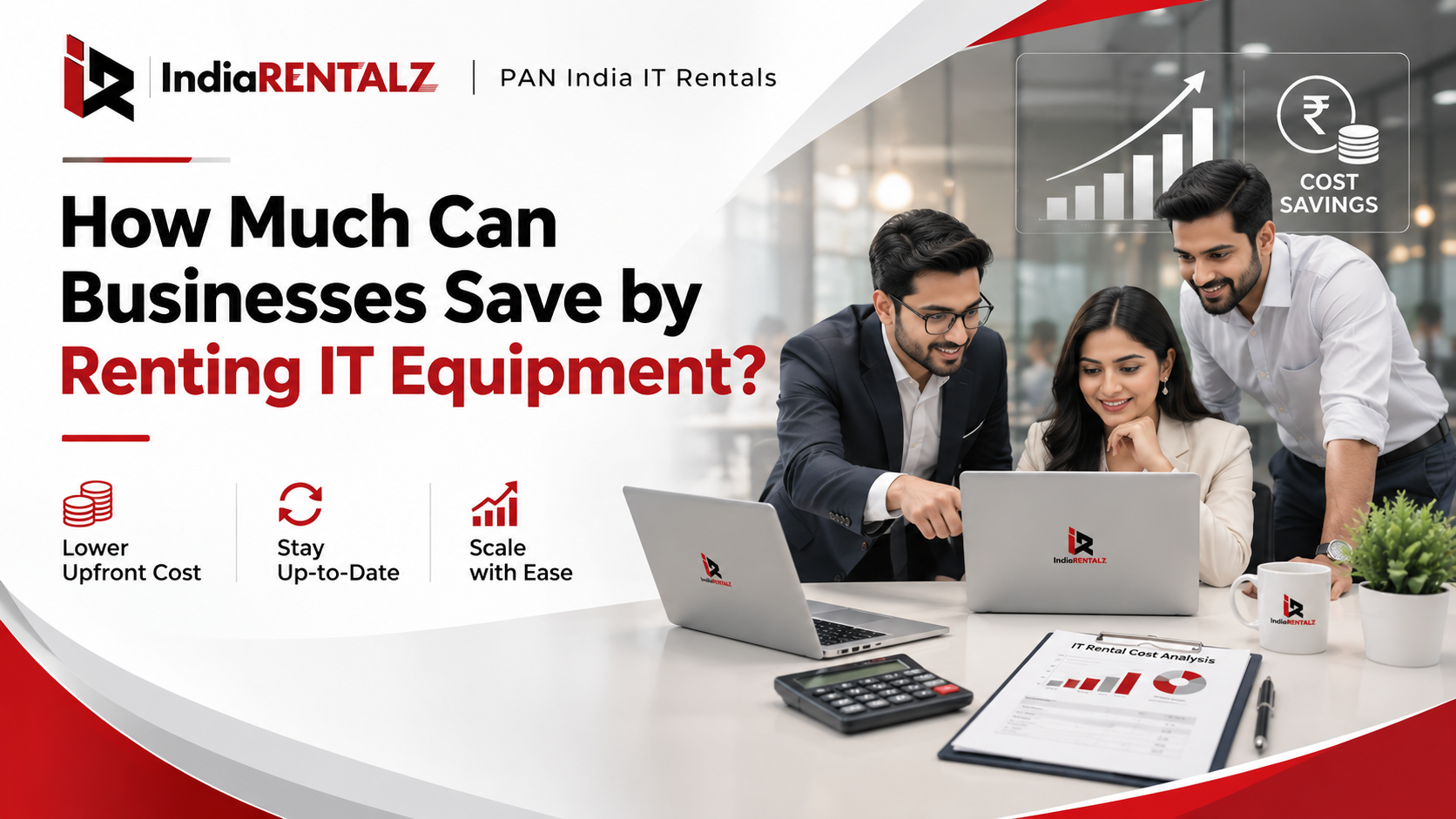
Every business needs reliable technology to operate efficiently. Whether employees use laptops for daily tasks, desktops for office operations, or workstations for demanding projects, IT equipment represents a significant business expense. However, renting IT equipment offers businesses an alternative to purchasing hardware, allowing them to manage technology requirements without heavy upfront investment.
As companies expand, their technology requirements often change. New employees need devices, projects demand additional computing power, and older systems gradually become less suitable for modern workloads. Consequently, businesses must decide how to meet these requirements without placing unnecessary pressure on their budgets.
Instead of committing substantial capital to purchasing devices, companies can access the equipment they need for an agreed period while maintaining greater flexibility in their IT planning.
Although renting does not always guarantee lower total costs, it can help organizations manage cash flow, avoid unnecessary purchases, and align technology expenses with actual business requirements.
The Real Cost of Owning Business IT Equipment
When businesses purchase laptops or desktops, the initial price is usually their primary consideration. However, hardware ownership involves several additional expenses that may not appear in the original procurement budget.
For example, a company purchasing 40 laptops must consider more than the cost of the devices. Over time, equipment may require repairs, component replacements, upgrades, and technical support.
Some common ownership-related expenses include:
- Initial hardware investment: Purchasing multiple devices requires significant capital.
- Maintenance and repairs: Businesses must manage hardware failures and replacement components.
- Technology upgrades: Changing software requirements may create a need for better processors, memory, or storage.
- Asset management: IT teams must track equipment allocation, condition, and availability.
- Storage and disposal: Unused or outdated devices may require secure storage, resale, or recycling.
Additionally, technology loses value as newer models enter the market. While some equipment retains reasonable resale value, businesses cannot always recover a substantial portion of their original investment.
Therefore, companies should evaluate the total cost of ownership rather than focusing only on purchase prices.
Renting IT Equipment and Reducing Upfront Investment
One of the main financial advantages of renting is the ability to access business hardware without paying its full purchase price at the beginning.
Consider a startup hiring 25 employees. If each suitable laptop costs ₹50,000, purchasing all 25 devices would require an upfront investment of ₹12.5 lakh.
For a growing business, this expenditure could affect other priorities, including recruitment, marketing, product development, and operational expansion.
In comparison, a rental arrangement distributes hardware expenses across the agreed usage period.
Consequently, businesses may preserve more working capital while still providing employees with the technology required for their responsibilities.
However, companies should remember that rental agreements may involve advance payments, refundable security deposits, logistics charges, and minimum rental commitments.
These factors influence the amount of cash required initially. Even so, the total upfront commitment may remain lower than purchasing equivalent equipment, depending on the rental terms.
A Practical Cost Comparison Between Renting and Buying
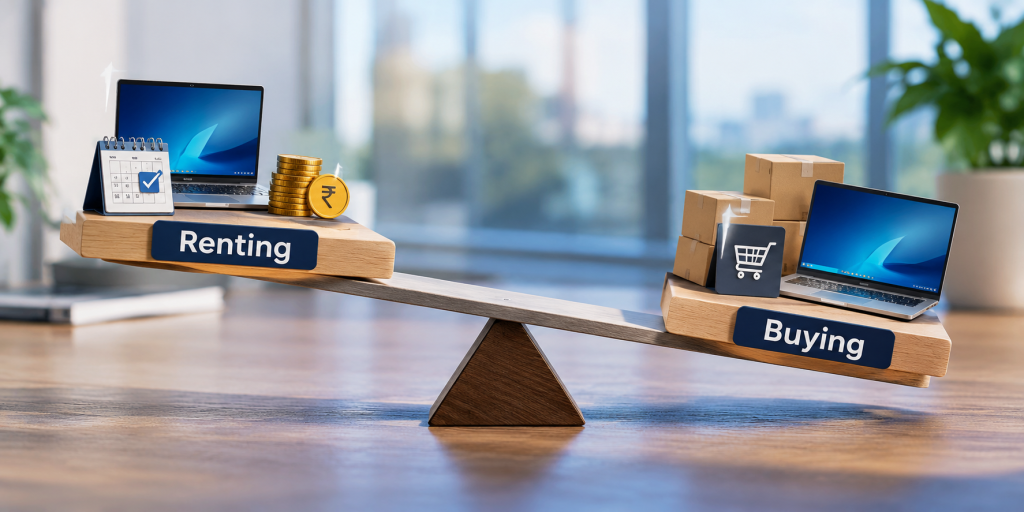
Understanding the financial difference between renting and buying requires more than comparing monthly rental charges with purchase prices.
Let’s consider a hypothetical company requiring 50 laptops for a 12-month project.
Scenario 1: Purchasing Laptops
Assume each laptop costs ₹45,000.
- Number of laptops: 50
- Purchase price per laptop: ₹45,000
- Total purchase investment: ₹22,50,000
At the end of the project, the company still owns the devices. Therefore, their remaining value should form part of the financial comparison.
If the laptops have an estimated combined resale value of ₹15,00,000 after 12 months, the net hardware depreciation would be ₹7,50,000.
The company must also consider any additional maintenance, financing, storage, or disposal expenses.
Scenario 2: Renting Laptops
Now assume the company receives a hypothetical rental quotation of ₹2,000 per laptop per month.
- Number of laptops: 50
- Monthly rental per laptop: ₹2,000
- Rental duration: 12 months
- Total rental charges: ₹12,00,000
In this example, renting requires a much lower initial hardware commitment. However, the ₹12 lakh rental expense exceeds the estimated ₹7.5 lakh depreciation cost of ownership before considering other expenses.
Therefore, renting would not automatically provide the lowest total cost in this particular scenario.
Nevertheless, it may still offer advantages in cash flow management, equipment returns, and reduced ownership responsibilities.
Note: These figures are illustrative calculations, not IndiaRENTALZ quotations or verified market rates. Actual rental charges depend on specifications, quantity, duration, availability, and commercial terms. Tax treatment and recoverable security deposits should also be considered separately.
Better Cash Flow Management Through IT Rentals
Cash flow plays an important role in business stability, especially for startups, SMEs, and organizations experiencing rapid expansion.
When companies purchase equipment, they convert available cash into assets that may remain in use for several years.
Although these assets support business operations, the money invested in them is no longer available for other immediate requirements.
Renting allows companies to spread hardware expenditure over time. As a result, finance teams can plan rental obligations alongside other operational expenses.
For example, a business opening a temporary office may prefer to allocate capital toward staffing, infrastructure, and customer acquisition rather than purchasing an entire inventory of computers.
Furthermore, predictable rental payments can support budgeting when organizations have clearly defined equipment requirements and rental periods.
However, companies should assess payment schedules carefully. Advance billing, refundable deposits, and contractual commitments affect actual cash flow.
Therefore, renting should form part of a broader financial plan rather than serve as an automatic replacement for hardware ownership.
Business Cost Savings During Temporary Projects
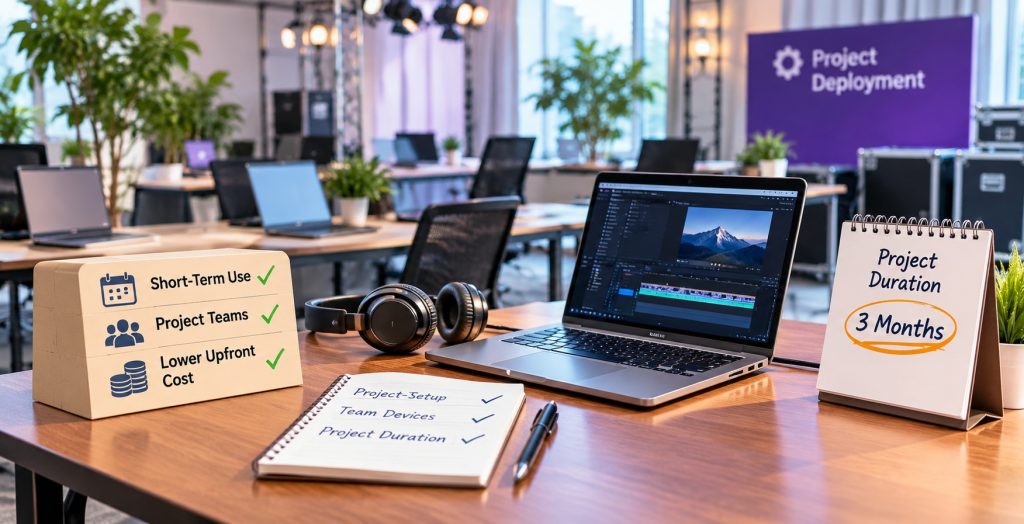
Businesses frequently require additional equipment for projects that last only a few weeks or months.
These situations may include seasonal recruitment, corporate training, short-term contracts, exhibitions, or temporary office operations.
Purchasing new devices for such requirements can create long-term ownership obligations even after the original project ends.
For instance, an organization managing a four-month customer support project may need 30 additional desktops. Once the project finishes, the company might have little immediate use for those systems.
Instead of purchasing equipment that could remain unused, the organization can explore rental options aligned with the project’s expected duration.
This approach may reduce unnecessary capital expenditure and simplify equipment planning.
Additionally, businesses can compare different rental periods before committing to a particular arrangement.
However, minimum tenure requirements and early termination conditions can influence the overall cost. Consequently, procurement teams should confirm these terms before finalizing a rental agreement.
Renting IT Equipment for Changing Technology Needs
Technology requirements rarely remain unchanged throughout a company’s operations.
Software updates, new business applications, and evolving employee responsibilities can increase hardware performance requirements.
For example, a company may initially need standard laptops for documentation and communication. Later, it might expand into software development, video editing, or data analysis, which require more powerful systems.
When businesses own their hardware, they must decide whether to upgrade existing devices, purchase replacements, or continue using older equipment.
Renting IT equipment gives organizations another option when planning these changes.
Depending on availability and contractual terms, businesses can explore alternative configurations for different roles or future projects.
This can be particularly helpful for organizations that need specialized workstations for limited periods.
However, rental upgrades are not necessarily automatic or free. Companies should confirm whether configuration changes require new quotations, revised agreements, or additional charges.
Managing Bulk Hardware Requirements More Efficiently
Large organizations often need multiple laptops, desktops, or workstations simultaneously.
For procurement managers, sourcing equipment in bulk involves coordinating specifications, quantities, budgets, delivery locations, and internal approvals.
Purchasing from multiple vendors may also introduce differences in device models and hardware configurations.
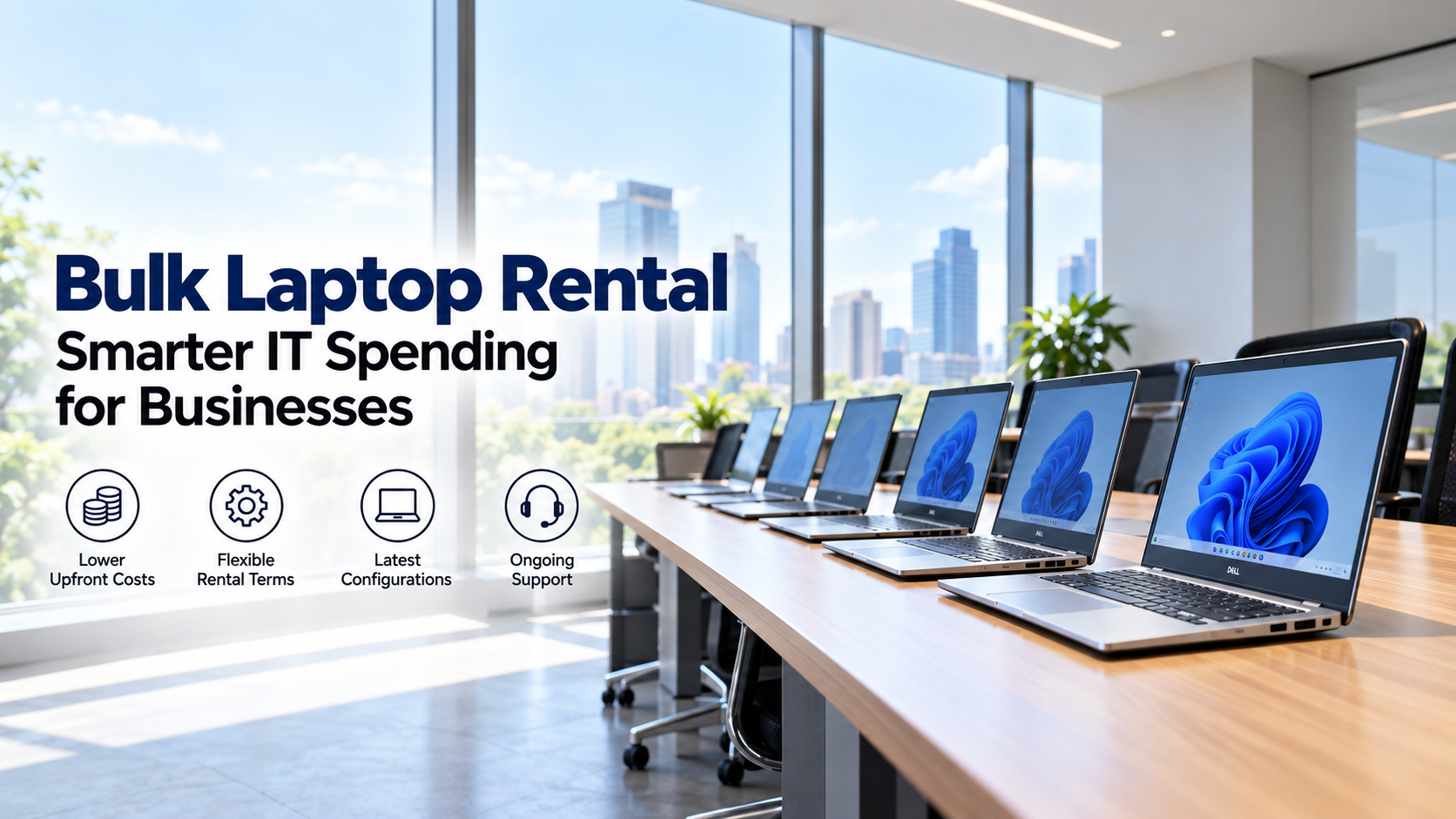
Corporate IT rental services can provide an alternative procurement approach, particularly when businesses require equipment for defined periods.
For example, a BPO company expanding its operations may need 100 desktops with standardized configurations. Similarly, an IT services company may require laptops for employees working across several Indian cities.
A centralized rental arrangement may simplify coordination by allowing procurement teams to consolidate their requirements.
Furthermore, consistent hardware specifications can make software deployment and technical support easier for IT administrators.
Nevertheless, businesses should verify inventory availability, delivery coverage, and service commitments before planning large-scale deployments.
Renting Versus Buying for Long-Term Financial Value
The financial advantages of renting and buying depend largely on how long a business expects to use its equipment.
Renting May Offer Advantages When:
- Equipment is required for temporary or project-based work.
- Workforce requirements fluctuate frequently.
- Businesses want to limit upfront capital investment.
- Specialized hardware is needed for a defined period.
- Companies prefer not to retain unused equipment after a project.
Buying May Offer Advantages When:
- Employees require the same devices for several years.
- Workforce requirements remain predictable.
- Equipment has a useful remaining life after the initial project.
- Ownership costs are lower than cumulative rental charges.
- The company has sufficient capital available for hardware procurement.
Neither approach is universally better.
Instead, finance and procurement teams should compare the entire expected cost of both options, including purchase expenditure, rental fees, maintenance, logistics, residual value, and financing costs.
The comparison should also consider productivity, equipment availability, and the organization’s ability to manage its own hardware inventory.
A Practical Framework for Evaluating IT Rental Expenses
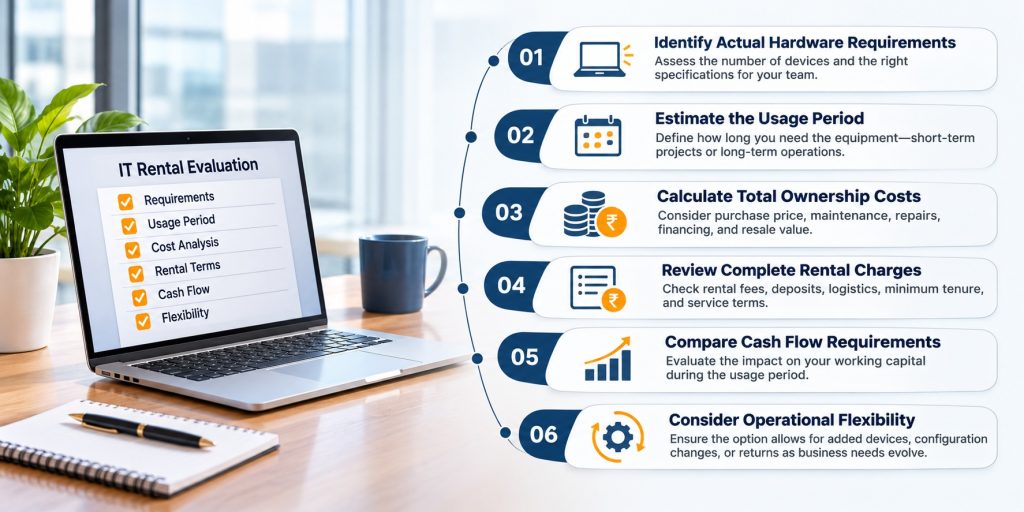
Before deciding whether to rent or purchase equipment, organizations should establish a clear assessment process.
1. Identify Actual Hardware Requirements
Determine how many laptops, desktops, or workstations the company needs and which specifications match employee responsibilities.
2. Estimate the Usage Period
A three-month project has different financial requirements from a permanent office setup. Therefore, businesses should forecast expected equipment usage realistically.
3. Calculate Total Ownership Costs
Include purchase prices, expected repairs, maintenance, financing costs, and estimated resale value.
4. Review Complete Rental Charges
Evaluate recurring rental fees, deposits, logistics, minimum commitments, and service conditions.
5. Compare Cash Flow Requirements
Assess how each option affects available working capital during the expected usage period.
6. Consider Operational Flexibility
Finally, evaluate whether the organization may need additional devices, alternative configurations, or equipment returns as business requirements change.
Following this framework helps companies make informed procurement decisions instead of relying on assumptions about potential savings.
Common Questions About Business IT Rental Costs
Is Renting IT Equipment Cheaper Than Buying?
Renting can be more economical for temporary projects, fluctuating requirements, or situations where ownership creates significant additional expenses. However, purchasing may provide better long-term value when businesses use the same equipment consistently for several years. A complete cost comparison is necessary.
Does Renting IT Equipment Help Improve Business Cash Flow?
Yes, renting can reduce the need for substantial upfront hardware expenditure by spreading costs across an agreed period. However, advance payments and refundable security deposits may still affect initial cash requirements.
Can Businesses Rent Laptops and Desktops in Bulk?
Yes. Corporate rental providers may support bulk laptop and desktop requirements based on available inventory, specifications, quantity, location, and rental duration. Companies should share detailed requirements to obtain an appropriate quotation.
Are Maintenance and Replacement Costs Included in IT Rentals?
Maintenance and replacement arrangements vary between providers and rental agreements. Some contracts include defined hardware support services, while others may involve exclusions or additional charges. Businesses should review the applicable service terms before proceeding.
Where Can Businesses Rent IT Equipment in India?
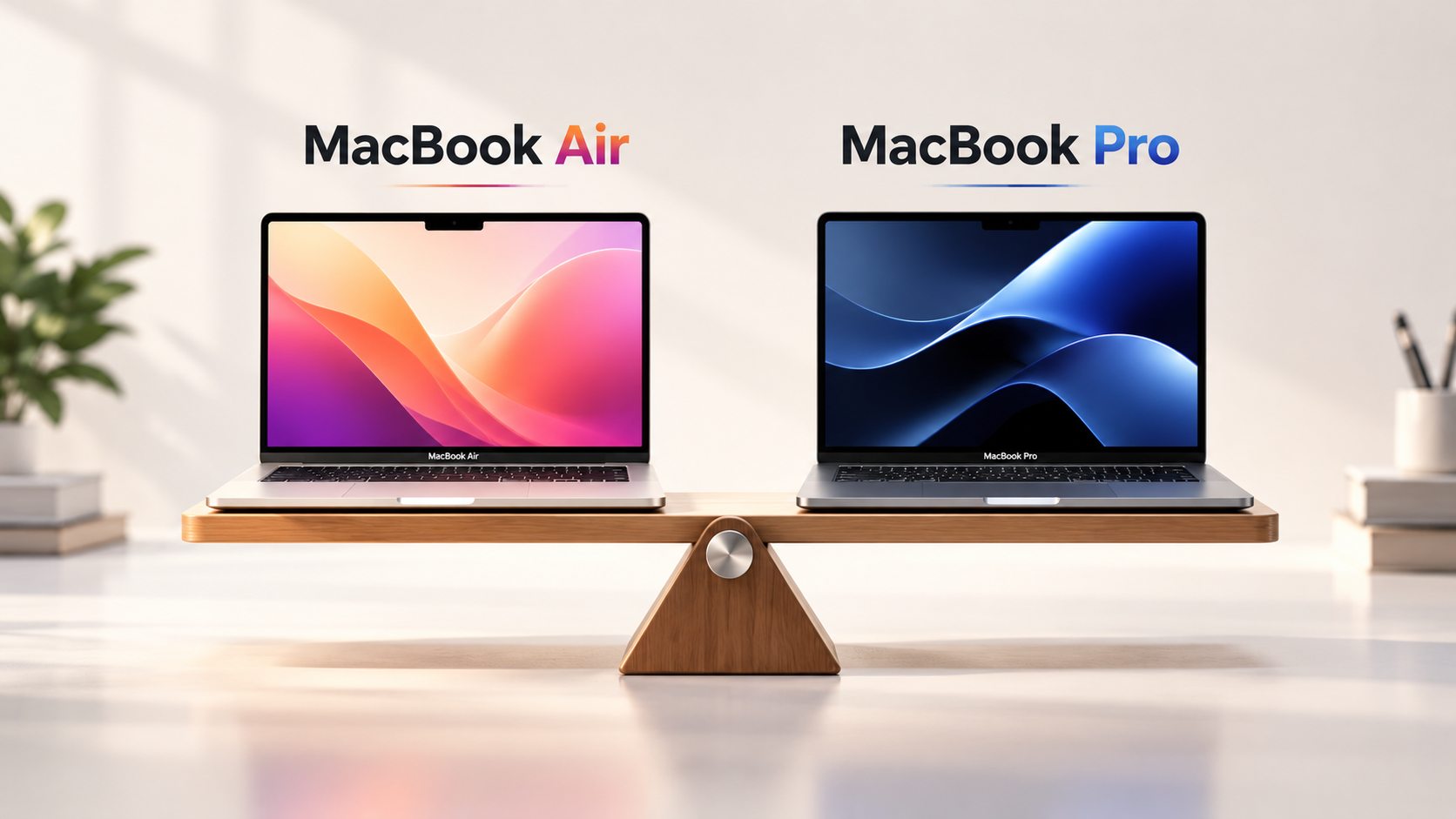
Organizations looking for IT rental solutions can explore IndiaRENTALZ, which provides laptops, desktops, MacBooks, workstations, and other IT equipment on rent for business requirements across India.
IndiaRENTALZ supports corporate and bulk rental enquiries with configurations based on business needs. Companies can share their equipment specifications, required quantities, rental duration, and delivery locations to request a customized quotation.
Actual pricing, equipment availability, delivery arrangements, and support terms depend on the specific requirement.
Conclusion
Managing business technology expenses requires more than choosing equipment with the lowest purchase price.
Organizations must consider upfront investment, maintenance, depreciation, cash flow, and changing operational requirements before making procurement decisions.
Renting IT equipment can offer financial flexibility by reducing the need for large hardware purchases and helping businesses align equipment usage with project requirements.
However, the true financial advantage depends on rental duration, commercial terms, ownership costs, and the expected useful life of the devices.
For companies planning temporary projects, workforce expansion, or changing IT requirements, evaluating rental options alongside purchasing can lead to more informed financial decisions.
Planning Your Next IT Investment?
Explore business IT rental solutions with IndiaRENTALZ and request a customized quotation based on your hardware requirements, quantity, and rental duration.
Website: https://indiarentalz.com/